Author Archives: admin

CultureRobot on HAIP

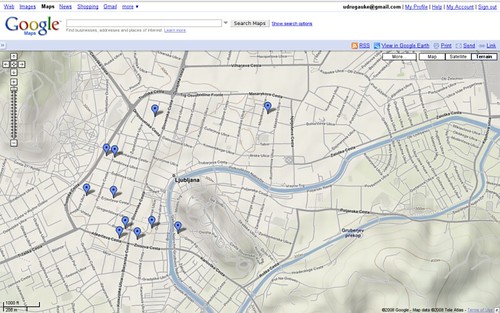
During HAIP festival in Ljubljana Palmieri Ricardo and Kruno Jošt mounted CultureRobot installation at cybercafe and culture center Kiberpipa. Cultural points in Ljubljana have been marked on the map:

Robots movement was tracked by infrared camera on the map. They have mounted diodes on the top.

In the video development can be seen in new design protecting robots from entangling together. Also a tracking patch can be observed. Map with cultural centers were trigged to change color and size of circle as robot crossed it. People could control robot movements.


Here is photolog from HAIP festival >>

CultureRobot preparations

Culture exchange program has made it possible for Kruno Jošt and Ricardo Palmieri to present installation CultureRobot at festival HAIP 08.

CultureRobot is participatory interactive installation that raises awareness of social and political sphere that is affecting autonomous cultural sphere in Ljubljana.
“The HAIP Festival puts on display multimedia art forms resulting from creative use of open technologies and the freedom of artistic expressions in open-source media. It presents works of the young, promising artists and creative engineers on international level, who specialize in top-notch, open-standards-supported arts and multimedia art practices. The festival features individuals and groups with a critical approach towards the technologies that surround us and shape our everyday environment.” (from http://www.haip.cc/)

From 27th to 31th of October final preparations of the installation has been made. Steps were:

1. Making of the Robots (recycled material for small robots)
2. Tracking the Robots (Open CV with hacked webcam for infrared detection)
3. Filtering the Robots data (positioning in PD)
4. Image of the Map (interactive)
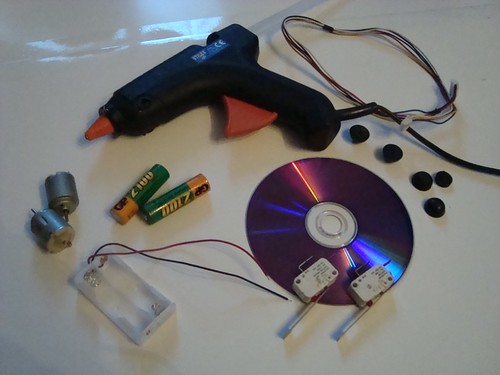
This are the tools and recycled material used to make a robot
robot parts
First we had to test electronical circuit that will power electro motors.

This is how the elements are supposed to be glued on the body of the robot – the old DVD.

To help stabilizing the wheels we used old metal plates. We glued wheels on metal plates. Wheels are made with rubber material found in pipe repair store.


Everything was glued on the top of the CD and circuit was connected based on the scheme.

Robot antenas that will on contact shut down one of the motors thus making robot turn in one direction were glued (later soldered) to electronic switches.

We fitted caps made from plastic bottles trying to prevent robots to hook each other with antennas.

This is the movie of robot movement

To help us work we visited local TV and radio repair shop and collected old remote controls that were disassembled and led diodes were taken out.

Led diodes are glued on the top of each robot.

Old web cam was hacked by inserting found developed slide film. This will filter out all unwanted infrared light and show only led diode light on the back of our robots.


Pure Data (open source software for multimedia interactivity) patch for detecting robot movements looks like this.

Collaborative map was developed during past months with artist and cultural workers from Ljubljana. Map is representing cultural points in center of Ljubljana. This map will continue to aggregate data on suggestions of the HAIP festival visitors.

This is PD patch that calibrates specific location on the map with the coordinates of the robot. It will detect when robot is on the coordinate thus creating visuals on the projected screen.

Activities of the robots are seen on the map by changing colors.

Interview with Bruno Vianna

Interview with Bruno Vianna, filmmaker and new media artist from Brasil, Rio de Janeiro.
Bruno talks about free culture, interactivity in new media and film making, sharing and distribution over new networks, about precarious work and creative industry in Brasil, governmental founding, etc. He was one of the organizers of Dorkbot Rio.

Bruno Vianna from genteljunk on Vimeo.

Deconstructing in heart of Rio

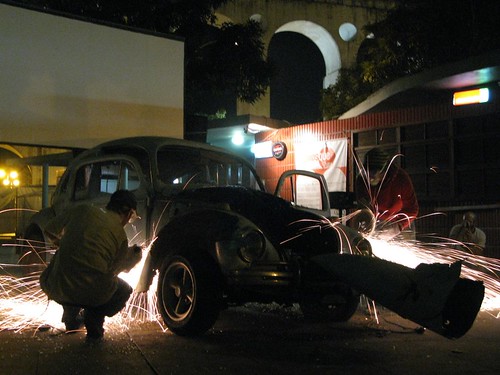
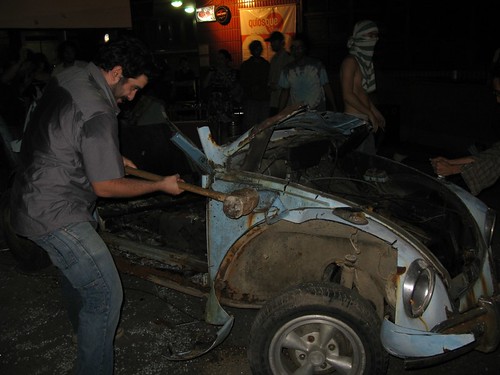
During opening session of Dorkbot Rio a team of deconstructionalists have performed once again. This time a ‘Fusca’ (popular Beetle or Volkswagen) produced in 1968 was carved down on 24th May 2008, 40 years after it was produced and 40 years after counterculture and those revolutionary days which are so much evoked in the Brazilian media today, due to older rich people remembering them as the ‘days when they were driving Beetles with the flowers in their hair’.
cutting it down

Dorkbot Rio was hosted by Circo Voador, famous club in the heart of Rio da Janeiro. Production unit were: Bruno Tarin, Bruno Vianna, Giuliano Bonorandi and Kruno Jost. Thousands of thanx to many others that helped and worked with us making video or photographic documentation we can all enjoy now. Thanx again to all people that came for the event and joined in at the end in the manner that I have encountered only with people from Brasil.
dja kicking it in

To see event photolog go here >>


Dorkbot-RJ Zero from bruno tarin on Vimeo.

Free culture events @ Circo Voador, RJ

logo Circo Voador is a cultural space in the middle of the Rio da Janeiro neighborhood called Lapa.It started almost 30 years ago under a circus structure, and it was the place where most of the best known brazilian rock bands had their first gigs. At one point it was closed by city mayer. The story goes that he visiting Circo Voador while celebrating for being elected where he was booed by the people there. He exercised his power by simply closing the space down.
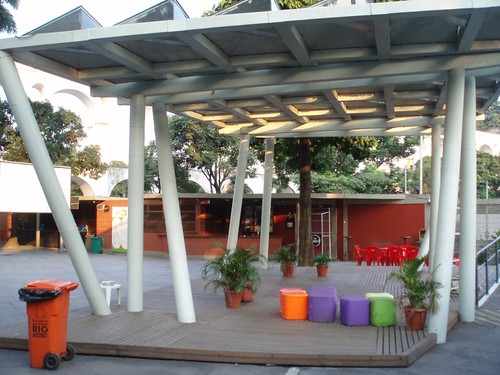
circo voador relax area

study groupNow run by the NGO with great financial help of municipal government, modern Circo Voador is transformed into club for culture with commercial programs, mainly samba, hip-hop and rock concerts, supported by companies like TIM (mobile phone operator popular among young people), Pepsi and such.

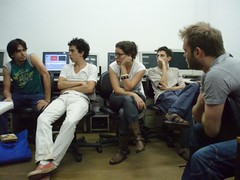
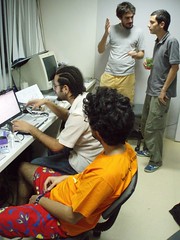
At the same time, under project Pontos de cultura, there are construction works happening under the concert stage where new spaces for workshops in open source tools for audio and video production will take place. One of the events that is not part of commercial program, but rather a place for research, knowledge exchange and collaborative work is study group GEMA Carioca that is happening every Thursday.

GEMA Carioca’s current project is creating video mixer with recycled material and using Arduino, an open-source electronics prototyping platform based on flexible, Bruno Tarin teaches cinelerra to studentseasy-to-use hardware and software. It’s intended for artists, designers, hobbyists, and anyone interested in creating interactive objects or environments. DIY videomixer can be used for mixing live inputs such as cameras, but also to control various software such as Pure Data for VJing and so on.
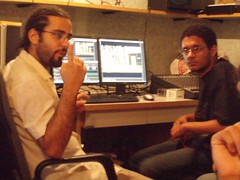
Cinelerra (open source software for video editing) workshops are held too at the production space of the CV area. At the same space there is a video production facilities where materials filmed at the concerts are edited for the archives.
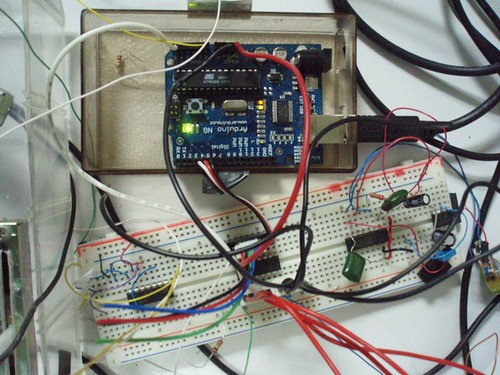
arduino with mixer

OIDARADIO

oidaradio logo

Kruno Jošt (CRO) presented sonic live session at OIDARADIO in Sao Paulo, Brazil, on Friday 09/05/08 at 16h. OIDARADIO is a temporary net radio station that is hosted by the institution Paço Das Artes for one month period. During this period an international group show brings together artists, experimental musicians, critics, curators and DJs to explore all areas of experimental/artistic sonic activity.

OIDARADIO, a project curated by Nick Graham-Smith and Kiki Mazzzucchelli , will streams live for 4 hours a day for 24 days (Mon-Fri, 6th – 30th May, 14-18h), which is a first exhibition of it’s kind in Brazil. After the month of radio shows that could be listened on-line and at the Paço Das Artes gallery, the exhibition will remain as a website with permanent archive of the event.

University Sao Paulo

university sao apulo

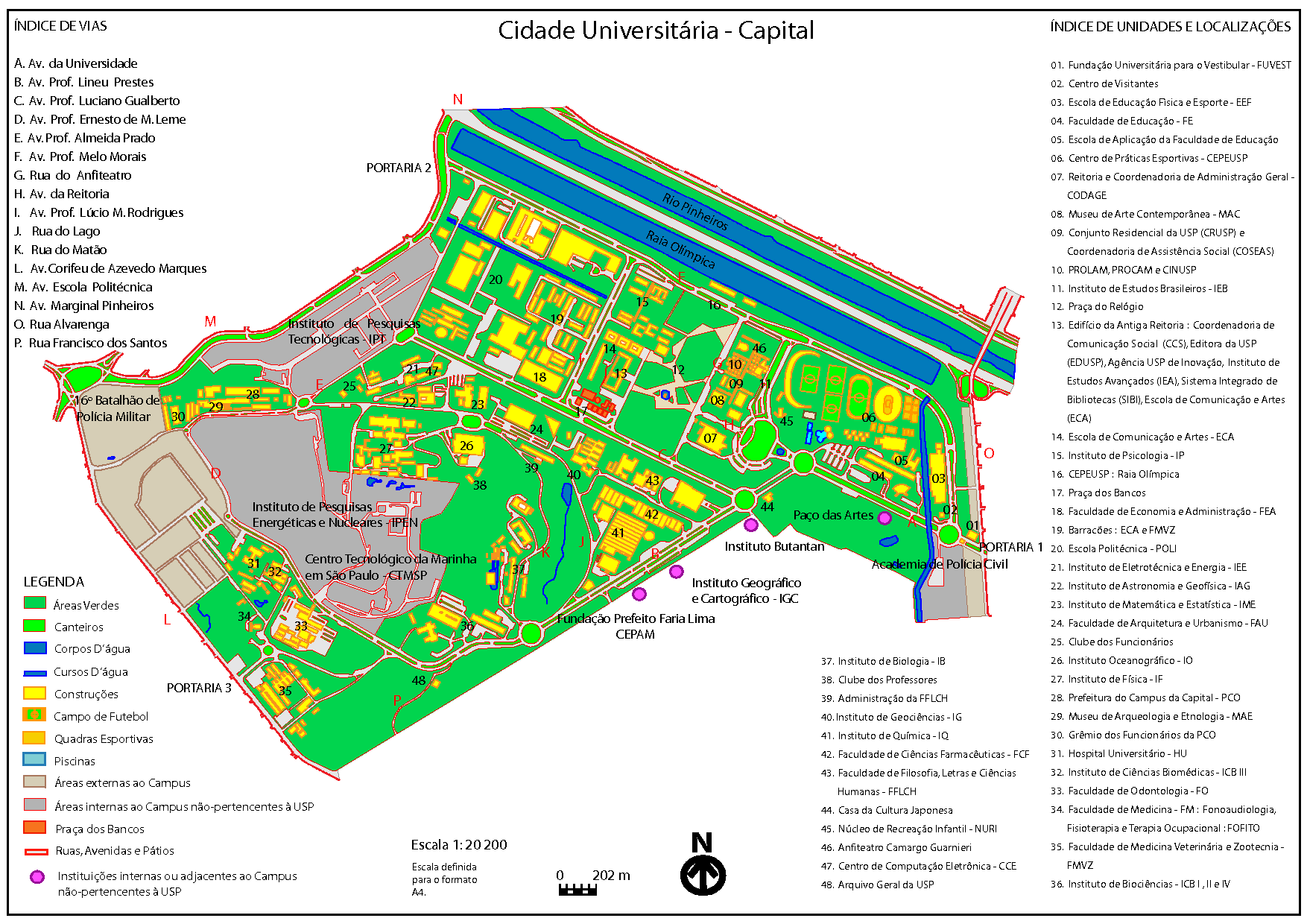
USP is one of the biggest universities in Brazil besides UNICAMP in Campinas (both in Sao Paulo state). USP is established 1934. hosting more than 70 000 students and covers the area of 76 799 555 m2 with 4 museums and 4 hospitals. Here is the map >>

disscusion in the calssI was invited to give a lecture on artistic production in GentleJunk collective and to talk about art and culture in general at Escola de Comunicação e Artes – ECA (School for Communication and Arts) on Friday 25th of April. As students were mainly from department of sculpturing, their professor and my host, Mario Ramiro invited me to present Circuit Bending as a way of handling electronic devices as objects. Discussion and lecture went on to many different questions including free culture, free media and ways of artistic production today.
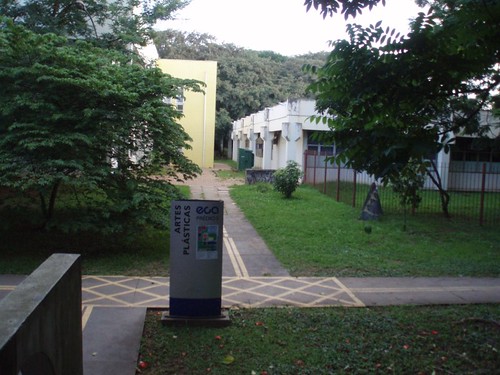
USP - looking from entrance to sculpture dep.

At one moment a digital photo camera went in a circle so everyone got a chance to take one photo. This is a photolg of that little experiment >>

Lots of thenx to Rosa and Mario for giving me a chance to have this experience.

Sao Paulo metro

small screens inside SP metroCity of Sao Pulo recently introduced the law of ‘visual pollution’ banning billboards from the streets. It was discussed that every billboard can distract driver for 15 meters, causing great risks in traffic.
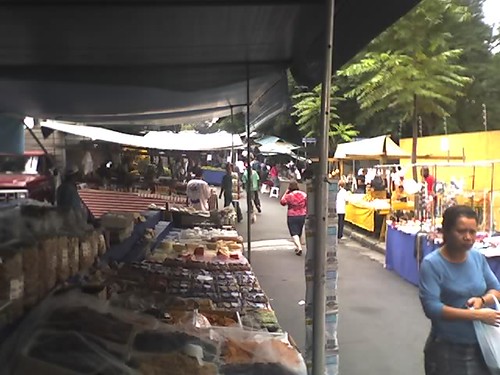
So, what is other place where lots of people travel and have enough time to consume commercials? Well, its metro. Metro cars have small screens with non stop video commercials.

Here you can also here an audio drive-trough one of the stations of LINHA VERDE (green line) at Sao Paulo metro.

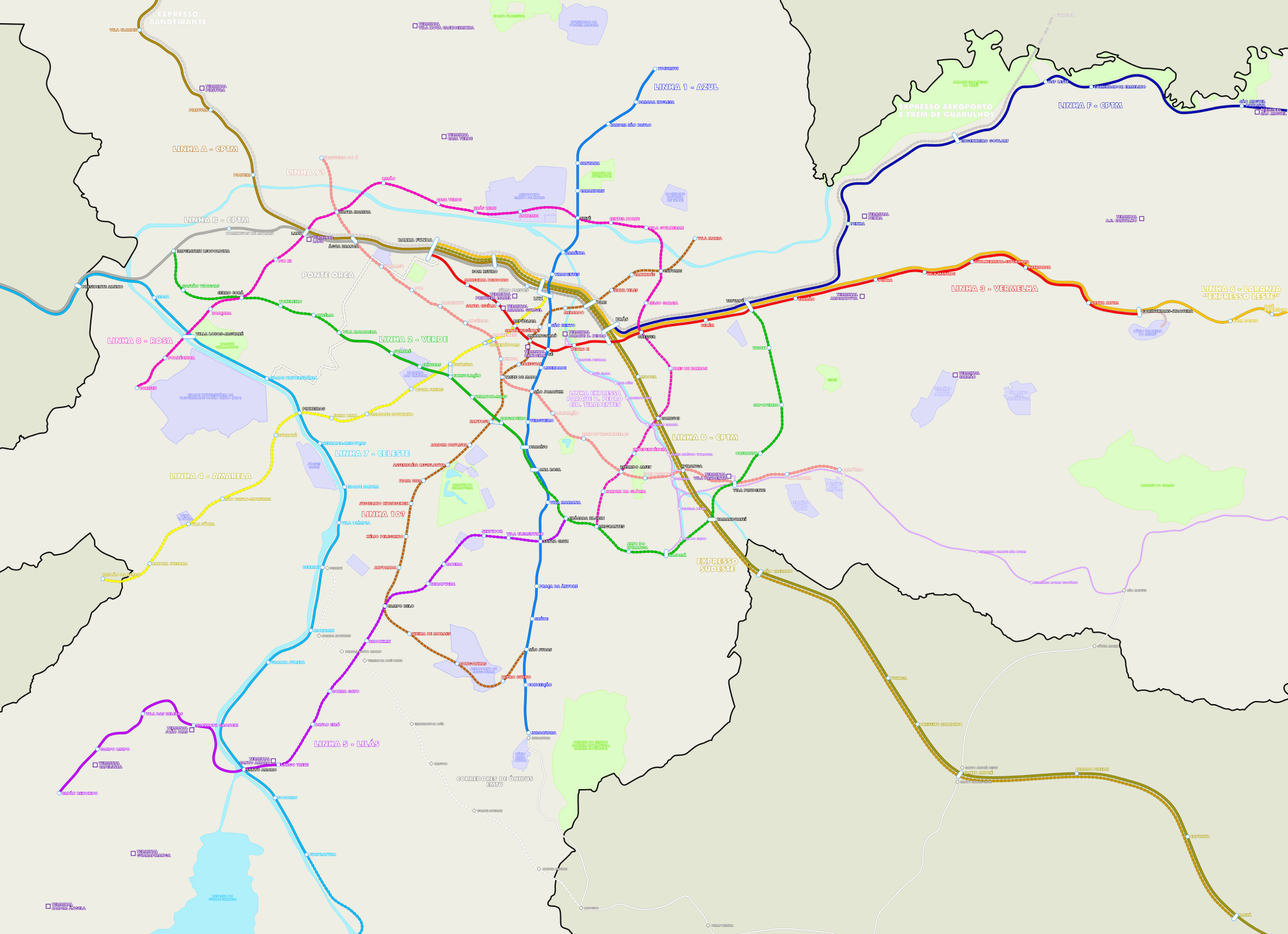
Map of SP metro